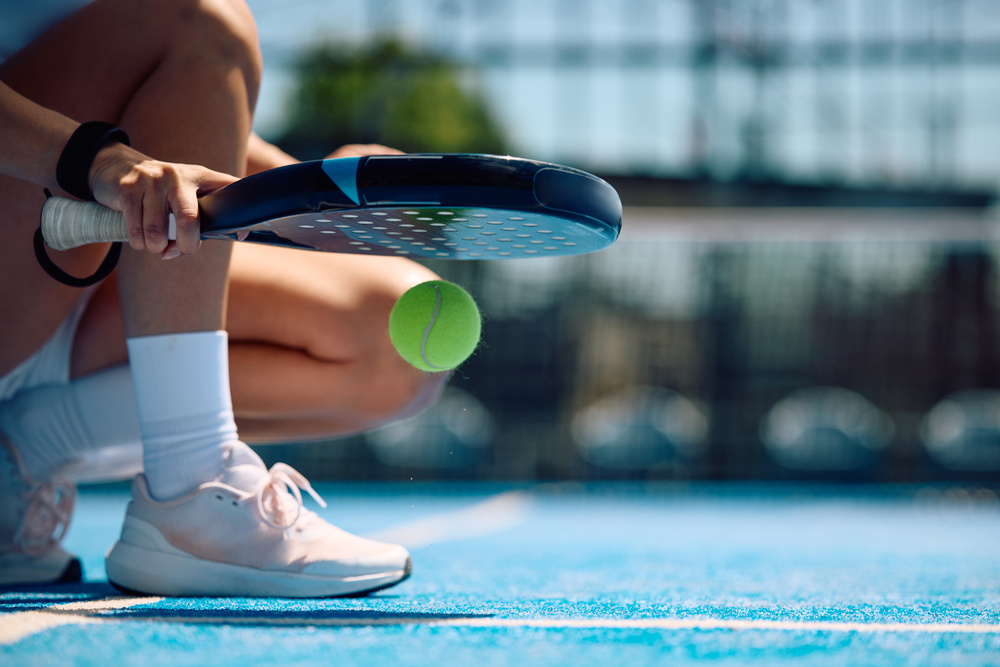
Choosing between indoor and outdoor padel courts is one of the first calls in any padel project, and one of the hardest to undo. It shapes the budget, the running costs and how many hours each court can be booked. The right answer depends on the local climate, the type of venue, the business model and the revenue the courts need to deliver. Here is how the two compare for club owners, hotels, sports centres and developers.
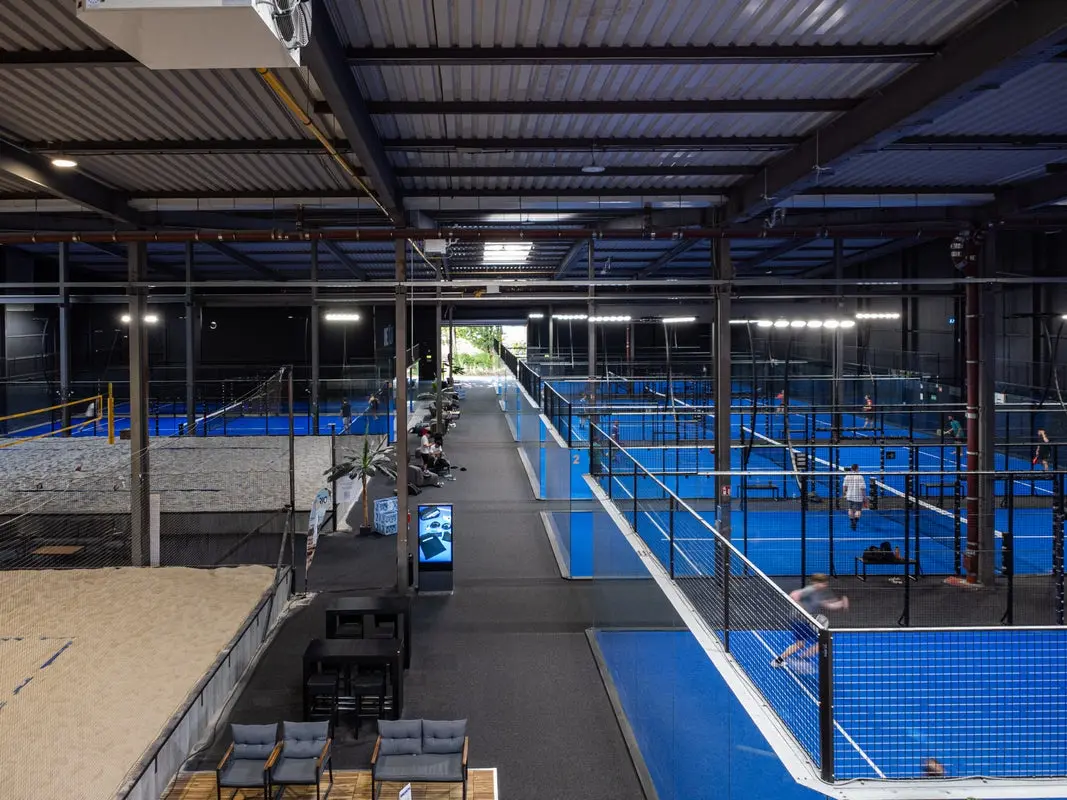
Both. Padel courts can go into a sports hall, a warehouse or a purpose-built building, or outdoors on open ground. The playing area is the same either way: 20 m x 10 m, enclosed by glass and mesh. Our guide to padel vs tennis court dimensions shows how that footprint compares with a tennis court.
What the setting changes is the specification. Outdoor padel courts face wind, rain, sun and temperature swings, so structure, coating, turf and drainage are chosen for the site. Indoor padel courts depend on the building: clear height, ventilation, lighting and installation access. Some venues add a canopy from a specialist supplier, and MejorSet courts can be installed under an existing roof or canopy as long as the clear height allows it.

Indoor courts sell the hours outdoor courts can lose: a wet Tuesday evening, a cold January morning.
When the weather does not decide whether a match goes ahead, bookings are easier to forecast. Leagues, coaching programmes and corporate events can be scheduled months ahead with no backup plan. If your business case rests on utilisation rates, predictable hours make it easier to defend.
When the investment is higher, it is because of the building, not the court. Around the 20 m x 10 m playing area (how it compares with tennis), the space needs room to move and access for installation.
Clear height decides most indoor projects, and no single figure suits every venue. It depends on the court model, the lighting layout and the level of play you plan to host. MejorSet checks it in the site survey before recommending a court.
The floor matters as much as the height. An indoor court needs a flat concrete slab with no slope. An existing slab can often be reused once holes, bumps and joints are repaired, while asphalt needs a perimeter ring beam or a portable court. MejorSet sends foundation guidelines for each case.
Add ventilation against humidity and condensation on the glass, heating or air conditioning, and lighting for every opening hour. Energy belongs in the business plan from day one.
Padel outdoor courts make sense wherever there is land. Resorts place them near pools and wellness areas, where they are part of the guest experience. Residential developments use them as a shared amenity.
No building means no construction phase, a simpler planning process and lower energy bills. That is where outdoor saves. The court itself usually costs more than the same court indoors, because it is built for open air: more wind resistance, coastal treatments where the air is salty or humid, and turf that wears faster in sun and rain and gets replaced sooner. Drainage and groundworks come on top. The final figure depends on the court model, groundworks, location, logistics, lighting and finishes.
Outdoors, the base is a reinforced concrete slab with a perimeter ring beam and a slight slope to one side so water drains off the court. Converting a tennis court or a car park is possible: the existing surface stays and a ring beam secures the court. MejorSet provides foundation guidelines for each scenario.
An exposed site does not need a roof, it needs a structure built for it. The Premier, FIP, Full Panoramic and Panoramic RC10 models are rated for wind loads of 140 km/h, and the most exposed sites may call for a model rated for stronger winds. The structure is Magnelis® steel with a QUALICOAT® certified paint coating. Coastal, salty or very humid sites can need a double primer, and courts very close to the sea can add hot-dip galvanising.

Indoor vs outdoor padel courts cost comparisons only work line by line:
Keep the court and the building apart in the numbers. The outdoor court usually costs more than the indoor one: a higher wind rating, coastal treatments, turf that wears faster, drainage and groundworks. Indoors the court is simpler, and the money goes into the building and the energy to run it. If a suitable building already exists, indoor can be the cheaper project. In markets with long, wet winters, the extra hours an indoor court can sell may justify building one. For a figure based on your site, contact MejorSet.
Clubs live on utilisation, and many combine both: indoor courts for a year-round core, outdoor courts for peak season. For daily play, the Panoramic RC10 is the panoramic court that adapts to each club, indoors or outdoors, in single or double installations. Clubs hosting competition can look at the Premier Padel court and the FIP Official Court. A club that wants to host FIP competition also needs extra space beside each court for the technical area, so it pays to plan the layout for it from the start. MejorSet has been the official court of the FIP since 2020 and of Premier Padel since 2024, with courts in more than 75 countries. See our sports club projects.
For most hotels the court is part of the landscape, so outdoors is the natural fit. The Full Panoramic gives maximum visibility next to the pool or the terrace. Hotels with an unused hall can go indoors, subject to clear height. Browse our hotels and resorts projects and residential projects.
Gyms, tennis clubs and wellness centres often have space that earns little. An existing hall can take indoor courts if the height works, and underused outdoor areas can take outdoor ones. Weighing padel against pickleball? Read the differences and similarities between pickleball and padel.

Outdoors, strong gusts and low sun change the game, and rain stops it. Indoors, light and temperature never change, which competitive players and coaches value. Outdoor courts offer what a hall rarely can: daylight, fresh air and a terrace where people stay after the match.
For an investor that matters: players who enjoy the court rebook.
Our FAQs cover the common technical questions, and the full MejorSet padel court range is online.
Neither wins everywhere. The outdoor court costs more to specify and to maintain. Indoors you save on the court but need a building and the energy to run it, and in return revenue is easier to predict. Outdoor courts grow with the land you have and work in most climates, provided structure, coating, turf, drainage and lighting are specified for the site.
The better investment is the one that fits your venue, your players and the hours you need to sell. Speak to MejorSet about the right indoor or outdoor court for your project.